

Authors: Srinivas Martha (Program Manager, ClinPharm)
About 9 out of 10 drug candidates that enter clinical trials never make it to market, and getting one approved medicine to patients now costs between 1 and 2 billion dollars, including failed attempts [1]. Failures late in development are especially costly because most of the money has already been spent by the time Phase 3 results are available. Model-informed drug development can help change this. Model-Informed Drug Development (MIDD) offers a powerful solution. At its core lies Population Pharmacokinetics/Pharmacodynamics (PopPK/PD) modeling, a quantitative framework that turns clinical data into predictive insights, enabling smarter dosing, optimized trial design, and reduced risk of failure.
The U.S. FDA now supports this approach through its MIDD Paired Meeting Program. This program gives sponsors a way to work directly with the agency to use quantitative methods to make trials more efficient, improve the chances of regulatory approval, and adjust dosing without additional studies [2].
For sponsors looking to understand how quantitative pharmacology integrates with clinical decision-making at Excelra, our dedicated Clinical Pharmacology capabilities page outlines the full spectrum of modeling and simulation services we offer — from early IND support through post-marketing regulatory submissions.
The foundation of population PK/PD modeling
Population PK-PD modeling, also called popPK or the pharmacometric approach, is central to MIDD. When two patients get the same dose, their drug levels or responses are rarely the same. These differences are called inter-individual variability (IIV) or between-subject variability (BSV), and they can be due to factors like kidney function, body weight, genetics, or other medications. Pharmacometricians do not ignore this variation. Instead, they figure out how much can be explained by patient characteristics and how much is still random and unexplained [3].
This process uses covariate analysis. First, modelers create a base model that shows the typical pharmacokinetic profile. Then, they test if adding factors like creatinine clearance, age, weight, liver markers, or other medications helps explain differences in drug clearance or distribution. Only the factors that clearly explain these differences are kept, while the rest are removed to keep the model simple. A critical distinction at this stage is statistical significance versus clinical relevance. Many covariates pass significance tests yet barely move exposure in any meaningful way. Pharmacometricians use the 80–125% exposure window as the practical decision threshold: covariate effects that keep predicted exposure inside this range usually do not warrant a dose change, while those that push it outside often do.
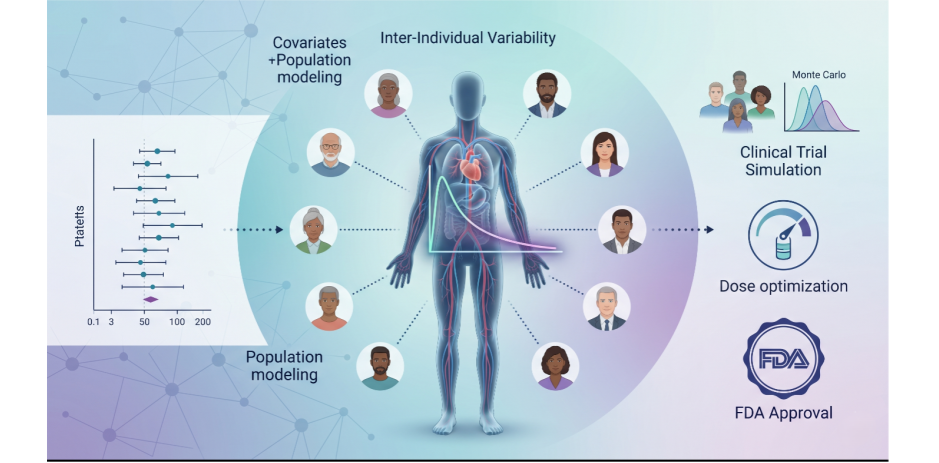
The forest plot is a key tool for showing these effects. Each row shows a different covariate scenario, such as severe kidney problems compared to normal function, or a patient at the 5th versus 95th weight percentile. The horizontal position shows the predicted change in exposure, usually as a ratio of AUC or Cmax compared to a reference patient. The whiskers show the 90% or 95% confidence interval. Reference lines at 80% and 125% of typical exposure mark the points where a dose change becomes clinically meaningful [3].
For example, in a population PK analysis of naloxegol with 1,247 subjects, many covariates were statistically significant. However, simulations showed that strong CYP3A4 inhibitors or inducers were the only ones that pushed exposure outside the clinically meaningful range. These findings had a direct impact on the drug’s label and interaction warnings [4].
The distinction between statistical significance and clinical relevance in covariate analysis is one of the most consequential judgments in pharmacometric practice. Excelra’s blog on Exploring New Frontiers: Clinical Pharmacology in Modern Drug Development provides additional context on how quantitative pharmacology tools are applied across the full drug development lifecycle — including how covariate-driven dosing decisions are communicated to regulators.
Dose optimization and Exposure-Response relationships
After predicting exposure, the next step is to understand its effects. In drug development, practitioners use exposure-response modeling to connect pharmacokinetic measures to safety and effectiveness. The most common measures are AUC over a dosing interval and Cmax. AUC is usually chosen when ongoing exposure influences the response, while Cmax is used when peak levels are linked to short-term toxicity.
Choosing between AUC-driven and Cmax-driven responses directly influences dosing regimen decisions and dose adjustments in special populations. An AUC-driven drug can often be given once daily because total exposure is what matters, while a Cmax-driven drug typically demands twice-daily dosing to flatten peaks. The same logic shapes special-population adjustments: in renal impairment, for example, a Cmax-driven drug may need a lower individual dose to control peaks, while an AUC-driven drug may need a longer dosing interval to bring total exposure back into the target range [5].
In early phases, exposure-response models help sponsors pick a starting dose for later trials by finding the part of the dose-response curve where more drug still helps, as opposed to the plateau where extra drug only causes side effects. In later phases, these models provide data to back up claims on the drug label.
When companies ask the FDA to approve a recommended dose, changes for organ problems, or new uses, the agency now often expects exposure-response analyses to support these choices [5]. In cancer drug development, the FDA’s Project Optimus has made this a formal requirement and marks a fundamental shift away from the traditional maximum tolerated dose (MTD) paradigm toward the optimal biological dose (OBD). The goal is no longer to find the highest dose patients can tolerate, but to use exposure-response data to identify the dose that maximizes benefit-risk balance for pivotal trials [6].
A concrete example of how dose regimen optimization through PK/PD modeling translates into real drug development decisions can be found in Excelra’s PK/PD Modeling for Dose Regulation case study — demonstrating how exposure-response analysis directly informed dosing strategy in a clinical program.
Clinical trial simulation (CTS) and ROI
Clinical trial simulation in pharmacokinetics builds on population models by going a step further. Instead of predicting results for just one typical patient, CTS creates virtual groups of patients, each with its own realistic characteristics, and tests them in a proposed trial thousands of times. This produces a range of possible trial results for each design, turning go or no-go decisions into informed choices. Companies leveraging MIDD have reported average time savings of about 10 months and cost reductions of roughly $5 million per program, making CTS one of the most measurable returns on investment in modern drug development [7].
The process is straightforward in theory. A modeler sets up a possible trial design — including how many people to enroll, how often to collect samples, the dosing plan, and eligibility criteria. They link this to a population PK/PD model and run many simulations of the drug levels and responses. By changing one part of the design at a time, such as comparing a 200 mg once-daily dose to a 100 mg twice-daily dose, or testing whether fewer samples per patient still yield reliable results, teams can find the design that gives the most useful data for the cost.
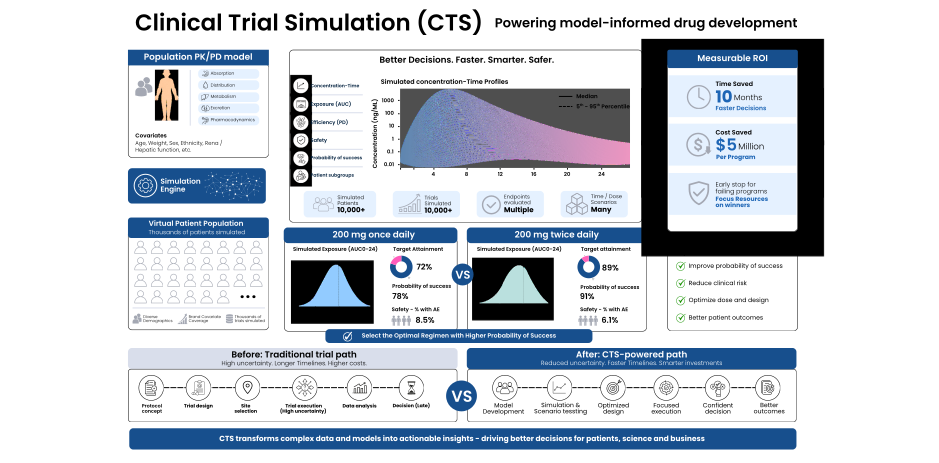
The benefits go further than the headline figures. In 2025, a major pharmaceutical company found that the biggest individual time savings — up to four years — came from pediatric extrapolation, where adult population PK and exposure-response models replaced the need for dedicated Phase 1 PK/PD studies in children. The same approach is increasingly being used to avoid dedicated Phase 1 studies in renal-impaired and hepatic-impaired populations as well. Beyond direct savings, the authors pointed out that some of the biggest benefits came from stopping likely-to-fail programs early, which saves resources but is harder to measure [7].
The connection between robust clinical data infrastructure and the quality of inputs for clinical trial simulation is critical. Excelra’s blog on enhancing drug development decisions with analysis-ready clinical datasets examines how structured, audit-ready data pipelines directly improve the reliability of downstream population PK modeling and simulation outputs.
Special populations and regulatory support
Certain patient groups are hard to include in standard clinical trials. Children, older adults, pregnant women, and people with kidney or liver problems are often underrepresented or left out of key studies. Modeling helps fill this gap. By using adult PK data and adjusting for factors like organ size, enzyme development, and kidney function, experts can predict drug exposure in these groups and suggest dose changes without putting patients through unnecessary trial-and-error.
These modeling methods are now a key part of the MIDD framework used by FDA reviewers. The Pediatric Research Equity Act (PREA) requires sponsors of certain NDAs and BLAs to submit a pediatric study plan, and population PK modeling and simulation often help determine the proposed pediatric dose in these plans [2]. The ICH E11A guideline on pediatric extrapolation explains how adult data can be used for children when exposure-response relationships are similar.
In 2025, a PBPK analysis of tofacitinib used adult clinical data to predict drug exposure in children, patients with liver or kidney problems, and in drug-drug interaction cases. The model recommended 4 mg twice daily for ages 12 to under 18, half the adult dose for moderate liver impairment, and 75% of the adult dose for severe kidney impairment [8].
For sponsors, these analyses are important at several regulatory steps. Population PK and PBPK studies are included in IND filings to support first-in-human and first-in-pediatric dosing, in NDA and BLA submissions to back up label information for special groups and drug interactions, and in post-marketing updates for new uses or forms. A recent review of FDA approvals from 2020 to 2024 showed that 65 out of 245 NDAs and BLAs (26.5%) included PBPK models as key evidence. Most of these focused on drug-drug interactions (81.9%), with dosing for organ impairment as the next most common reason [9]. PopPK/PD and PBPK modeling are now routinely accepted by both the FDA and EMA to support dosing recommendations in pediatrics, renal and hepatic impairment, and drug-drug interactions, often eliminating the need for additional dedicated clinical studies.
Excelra’s quantitative systems pharmacology capabilities are directly relevant to organizations navigating special population dosing challenges. Our Intelligent Quantitative Systems Pharmacology (iQSP) service supports dose selection in complex patient populations where traditional clinical studies are impractical — using mechanistic modeling to generate the evidence regulators expect.
Advanced modeling and efficiency
MIDD is advancing where traditional pharmacometrics meets new computational methods. Three threads define the cutting edge: integrated PBPK and PopPK frameworks, machine learning for covariate screening, and Bayesian methods for updating priors with new data. Population PK models use statistics to study variability, while PBPK models take a more detailed approach by modeling organs, blood flow, and enzymes. Combining these methods improves both: PBPK predictions can be refined with population data, and population factors can be better understood in a physiological context. This combined approach is now commonly used to predict drug interactions and organ impairment effects without needing extra clinical studies [9].
Machine learning and Bayesian methods are speeding up the modeling process. Traditional nonlinear mixed-effects modeling can take experts days to run and adjust. In contrast, machine learning tools like random forests, gradient boosting, and neural networks can quickly scan large sets of patient data to highlight important factors. This allows pharmacometricians to focus on the most relevant variables [10]. Bayesian methods add value by combining earlier data from similar drugs or studies with new trial results, updating estimates as new information comes in. This helps improve accuracy when sample sizes are small and supports adaptive dose-escalation designs that can change quickly as new data are collected.
This approach has several key benefits. It reduces the number of studies needed for drug interactions and special populations, speeds up timelines through better trial design, and lowers the risk of late-stage failures by solving dose and design problems early.
The integration of AI and machine learning into pharmacometric workflows is part of a broader shift in how data-driven decisions are made in drug development. Excelra’s blog on leveraging AI in data analytics for precision medicine explores how machine learning tools are being applied alongside quantitative pharmacology to improve patient stratification and dose individualization — capabilities directly relevant to the adaptive modeling approaches described here.
Securing regulatory approval with quantitative pharmacology
Quantitative pharmacology has moved from a supporting role to being a key part of modern drug development. Population PK/PD modeling helps explain why patients respond differently. Exposure-response analysis uses that knowledge to guide dosing, while clinical trial simulation tests major design choices before enrolling any patients. These tools together form the backbone of a strong regulatory submission.
For sponsors working through today’s review process, these models are now essential. The FDA’s MIDD Paired Meeting Program, ICH M15 draft guidance, and growing modeling requirements for IND, NDA, and BLA filings all show the same trend. Submissions without strong quantitative pharmacology are now seen as lacking. Teams that start early with population PK/PD modeling, exposure-response analysis, and trial simulation are more likely to achieve effective dosing, clear labeling, and drug approval.
Population PK/PD modeling is no longer a ‘nice-to-have’; it has become a strategic imperative in modern drug development. Sponsors who embrace MIDD early gain clearer dosing recommendations, stronger regulatory packages, and faster paths to market.
At Excelra Knowledge Solutions, we combine deep clinical pharmacology expertise with advanced data curation and modeling capabilities to help our partners de-risk development programs and accelerate time-to-market. Whether you need support with CTOD development, SLR/MA, or end-to-end PopPK/PD modeling, our team is ready to collaborate.
To understand how Excelra’s modeling expertise sits within a broader drug development support offering, explore our Clinical Data Services page — covering the full range of quantitative pharmacology, data curation, and regulatory submission support services available to pharma and biotech partners.
References
- https://pmc.ncbi.nlm.nih.gov/articles/PMC9293739/
- https://www.fda.gov/drugs/development-resources/model-informed-drug-development-paired-meeting-program
- https://pmc.ncbi.nlm.nih.gov/articles/PMC11098151/
- https://pmc.ncbi.nlm.nih.gov/articles/PMC4693583/
- https://pmc.ncbi.nlm.nih.gov/articles/PMC4625861/
- https://accp1.onlinelibrary.wiley.com/doi/full/10.1002/cpdd.1607
- https://pmc.ncbi.nlm.nih.gov/articles/PMC12272314/
- https://pmc.ncbi.nlm.nih.gov/articles/PMC11945186/
- https://pmc.ncbi.nlm.nih.gov/articles/PMC12655628/
- https://bpspubs.onlinelibrary.wiley.com/doi/abs/10.1111/bcp.14801
What is population PK/PD modeling and why does it matter in drug development?
Population pharmacokinetics/pharmacodynamics (PopPK/PD) modeling is a quantitative framework that characterizes how a drug behaves in a population of patients — not just a single idealized individual. It captures inter-individual variability in drug absorption, distribution, metabolism, and elimination, and uses covariate analysis to explain why some patients have higher or lower drug exposures based on measurable characteristics like kidney function, body weight, or genetics. In drug development, PopPK/PD modeling matters because it enables sponsors to predict drug behavior across subgroups without running a separate clinical study for every population, to optimize dosing regimens before committing to a pivotal trial, and to build the quantitative evidence that regulatory agencies now expect in NDA, BLA, and IND submissions. The FDA’s MIDD Paired Meeting Program explicitly endorses this approach as a mechanism to make drug development more efficient and increase the probability of regulatory success.
What is Model-Informed Drug Development (MIDD) and how does it reduce development costs?
Model-Informed Drug Development is a framework in which quantitative modeling and simulation — including population PK/PD modeling, exposure-response analysis, PBPK, and clinical trial simulation — are integrated into drug development decisions rather than used only retrospectively. By using models to predict trial outcomes, identify optimal doses, and extrapolate data to special populations before running additional studies, MIDD reduces the need for expensive, time-consuming clinical work. Companies leveraging MIDD have reported average time savings of approximately 10 months and cost reductions of around $5 million per program. The largest individual savings can reach four years in programs where pediatric extrapolation or organ impairment modeling replaces dedicated Phase 1 studies. The FDA actively supports MIDD through its Paired Meeting Program, which allows sponsors to engage directly with the agency on modeling strategies for specific development questions.
What is the difference between PopPK and PBPK modeling?
Population pharmacokinetic (PopPK) modeling is a statistical approach that characterizes drug exposure variability across a patient population using clinical trial data. It identifies covariates — patient characteristics like renal function or body weight — that explain differences in drug clearance or distribution, and estimates residual unexplained variability. Physiologically-based pharmacokinetic (PBPK) modeling takes a mechanistic approach, building a computational model of the body’s organs, blood flow, and drug-metabolizing enzymes to predict how a drug will behave based on its physicochemical properties and the physiology of the patient population. In practice, PBPK is particularly useful for predicting drug-drug interactions and organ impairment effects early in development when clinical data are limited, while PopPK is more commonly used to characterize variability and support dosing decisions once Phase 1 and 2 data are available. Increasingly, the two approaches are combined — PBPK predictions inform PopPK structure, and PopPK data refine PBPK parameters.
How does covariate analysis in PopPK modeling support dose individualization?
Covariate analysis in population PK modeling identifies which patient characteristics — such as renal function, liver markers, body weight, age, or concomitant medications — significantly influence drug exposure in a way that is clinically meaningful. The key distinction pharmacometricians make is between statistical significance and clinical relevance. A covariate may pass a statistical significance threshold but have minimal practical impact on exposure. The standard clinical decision threshold is the 80–125% exposure window: covariate effects that push predicted exposure outside this range typically warrant a dose adjustment, while those that stay within it usually do not. This analysis directly informs label language about dose adjustments for special populations — including patients with renal or hepatic impairment, pediatric patients, or those taking interacting medications — often eliminating the need for dedicated clinical pharmacology studies in each subgroup.
What does the FDA's Project Optimus mean for exposure-response modeling?
Project Optimus is the FDA’s initiative to reform dose optimization and selection in oncology drug development. Historically, cancer drugs were developed using the maximum tolerated dose paradigm — find the highest dose patients can withstand and use that in pivotal trials. Project Optimus formally shifts this toward the optimal biological dose, defined as the dose that maximizes the benefit-risk balance based on exposure-response data rather than tolerability alone. For sponsors, this means that exposure-response analyses are now a regulatory requirement — not an optional supporting analysis — for oncology drug development programs. The FDA expects sponsors to characterize the relationship between drug exposure and both efficacy and toxicity endpoints, and to use this data to prospectively select the dose for Phase 3 trials. This requirement elevates population PK/PD modeling and clinical trial simulation from supporting roles to core elements of the development strategy for every oncology program.
Can population PK modeling replace clinical studies in special populations?
Population PK modeling cannot fully replace clinical studies in special populations, but it can — and increasingly does — eliminate the need for dedicated Phase 1 pharmacokinetic studies in specific subgroups. The FDA and EMA now routinely accept PopPK and PBPK analyses as primary evidence for dosing recommendations in pediatric patients, patients with renal or hepatic impairment, and drug-drug interaction scenarios. The key requirement is that the model be built on data that captures sufficient variability across the relevant characteristics, and that simulation-based predictions be validated against any available observed data. In pediatric development, this approach has reduced timelines by up to four years in programs where adult exposure-response relationships are shown to be similar to those expected in children — meeting the requirements of ICH E11A guidance. For sponsors, this represents a meaningful reduction in the cost and ethical burden of early-phase clinical work in vulnerable populations.
Ready to Strengthen Your Regulatory Submission with Population PK/PD Modeling?
Excelra combines clinical pharmacology domain depth with advanced data curation and quantitative modeling capabilities to support drug development programs from IND through post-marketing. Whether you need end-to-end PopPK/PD modeling, exposure-response analysis, clinical trial simulation, or PBPK support for special populations, our team is ready to collaborate.