

Authors: – Manimaran Asokan, Veronica Medikare, Prashanth Reddy Rikkala, Mahendra Pal Singh
Post-translational modifications (PTMs) are covalent, enzyme-mediated changes that occur to proteins after their synthesis. Over the past decades, a diverse array of PTMs has been identified, including phosphorylation, ubiquitination, acetylation, glycosylation, methylation, neddylation, SUMOylation, cysteine oxidation, and both short- and long-chain acylation, as well as redox-based modifications [1]. These modifications involve the covalent attachment of functional groups — such as phosphate, methyl, acetyl, or carbohydrate moieties — or even small proteins to specific amino acid side chains. In some cases, PTMs also include the proteolytic cleavage of polypeptide chains. Through these biochemical alterations, PTMs exert precise control over protein structure, activity, stability, and subcellular localization, thereby orchestrating key cellular signalling pathways and functions. By introducing this additional layer of regulation, PTMs greatly expand the functional diversity of the proteome and are indispensable for the proper biological activity of most proteins [2].
For a foundational overview of why post-translational modifications matter as drug targets — including the writer-eraser-reader framework and the challenge of PTM enzyme selectivity — see the companion piece in this series: Turning PTM Data into Drug Discovery Decisions: How Integrated Intelligence Accelerates R&D.
Key PTM types and their biological roles
To date, more than 650 distinct PTM types have been identified, encompassing well-characterized examples such as phosphorylation, acetylation, methylation, ubiquitination, glycosylation, SUMOylation, and ADP-ribosylation (Figure 1). Continued advances in proteomics and mass spectrometry are steadily revealing new post-translational modifications, underscoring both their remarkable diversity and their highly context-dependent roles in cellular biology [2].
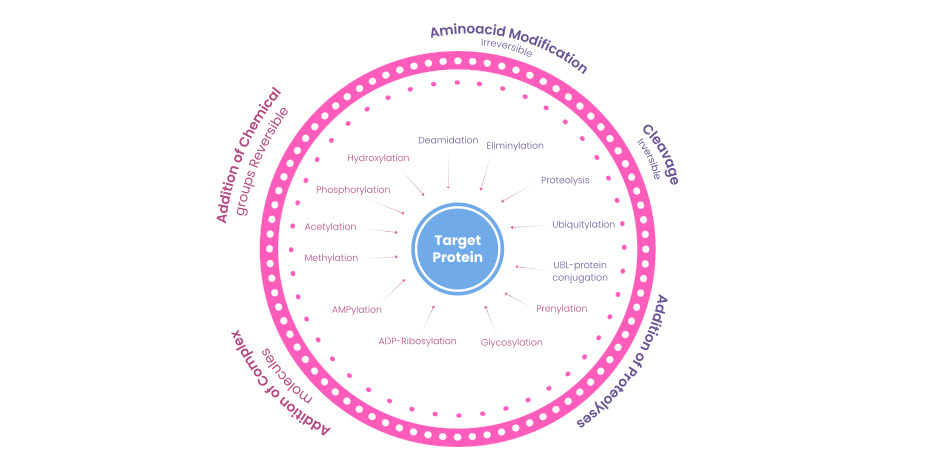
Figure 1: Common types of post-translational modifications.
Mechanistically, most PTMs entail the covalent attachment of various chemical groups, ranging from small molecules, lipids, carbohydrates, and polypeptides. These modifications are generally named based on the type of group added. Some PTMs may even have side chains of amino acids. Involvement of direct chemical alterations of amino acids such as citrullination converts arginine into citrulline, thereby altering its intrinsic biochemical properties of the proteins [3,4]. Functionally, PTMs serve as dynamic molecular switches that fine-tune protein activity, stability, subcellular localization, and protein–protein interactions. Through these coordinated effects, they regulate a wide spectrum of cellular processes and signalling networks, making them indispensable for maintaining cellular homeostasis.
The diversity of PTM types — spanning over 650 identified modifications — creates a correspondingly large space of potential drug targets and biomarkers. Excelra’s whitepaper on Identifying Druggable Therapeutic Targets provides a structured framework for evaluating which of these modification types represent actionable opportunities in a given disease context, covering both established PTM categories and emerging modifications.
Dysregulation of Post-Translational modification machinery in disease
Post-translational modifications (PTMs) are central to maintaining cellular homeostasis, acting as dynamic regulators of signaling pathways, gene expression, immune responses, and metabolic processes. The precise control of these modifications is essential for normal physiological function. Increasing evidence indicates that disruption of PTM regulation is a key molecular driver of a wide range of human diseases [Table 1]. Such dysregulation can alter protein function, stability, and interaction networks, ultimately contributing to disease onset and progression.
| Post-Translational Modification | Modified Residue | Key Functional Role | Pathophysiological Relevance |
| Phosphorylation | Ser, Thr, Tyr | Controls signalling cascades, enzyme activity, protein–protein interactions | Cancer, inflammatory and metabolic diseases |
| Acetylation | Lys | Regulates chromatin structure, transcription, protein stability | Cancer, neurodegeneration |
| Ubiquitination | Lys | Protein degradation, trafficking, signalling regulation | Cancer, neurodegeneration, immune disorders |
| Methylation | Lys, Arg | Epigenetic control, transcriptional regulation | Cancer, developmental disorders |
| Glycosylation | Asn (N-linked), Ser/Thr (O-linked) | Protein folding, stability, cell recognition | Cancer, immune and congenital disorders |
| SUMOylation | Lys | Nuclear transport, transcription, stress responses | Cancer, viral infection |
| ADP-ribosylation | Glu, Asp, Ser, Lys | DNA damage response, chromatin regulation | Cancer, inflammatory diseases |
| Palmitoylation | Cys | Membrane targeting, signal transduction | Cancer, neurological disorders |
| Nitrosylation | Cys | Redox signalling, enzymatic modulation | Cardiovascular and neurodegenerative diseases |
Table 1: PTM Functional Overview and Therapeutic Relevance
In cancer, PTMs regulate the stability, activity, and interactions of proteins governing cell proliferation, apoptosis, DNA repair, and metastasis. For example, aberrant phosphorylation — often driven by hyperactive kinases — can lead to sustained activation of oncogenic signaling pathways, promoting tumour initiation and progression. PTM dysregulation also contributes to immune and inflammatory disorders by disrupting immune tolerance and the control of inflammatory responses, while in metabolic diseases, altered PTMs impair tightly regulated metabolic networks. In the nervous system, PTMs are essential for neuronal protein function, synaptic signalling, and cytoskeletal integrity; their disruption is closely linked to the development of neurodegenerative disorders [5–10].
Collectively, the widespread involvement of PTMs in disease underscores their dual significance as both high-confidence biomarkers and promising therapeutic targets. Their reversible, enzyme-mediated nature — often with pathway-specific effects — makes PTM-regulating enzymes, including kinases, phosphatases, acetyltransferases, and ubiquitin ligases, particularly attractive candidates for targeted drug discovery.
The role of PTMs as disease biomarkers extends well beyond cancer. Excelra’s Biomarker Landscape Analysis blog examines how modification-state biomarkers are being integrated into precision medicine frameworks — including their use as patient stratification tools and pharmacodynamic endpoints in clinical trials targeting PTM-regulating enzymes.
Post-Translational modifications as therapeutic targets
Building on this strong biological and mechanistic foundation, PTM-modifying enzymes have emerged as highly druggable targets, enabling a broad spectrum of therapeutic strategies. These include small molecules, monoclonal antibodies, proteolysis-targeting chimeras (PROTACs), and gene-editing approaches [11]. Kinase inhibitors represent the most established class of PTM-targeted therapies. In parallel, the ubiquitination pathway is therapeutically exploited through proteasome inhibitors, E3 ligase modulators, and targeted protein degradation strategies. Acetylation is targeted using HDAC, HAT, and bromodomain inhibitors, while methylation is modulated through inhibitors of DNMT, EZH2, and PRMT enzymes (Figure 2). More recently, glycosylation and lipidation pathways have gained attention as therapeutic entry points, particularly for modulating immune recognition, metastasis, and oncogenic signaling. Together, these advances are expanding the therapeutic landscape and may enable more effective interventions for complex diseases, including those driven by resistant or previously undruggable targets.
Examples of FDA-Approved drugs targeting PTMs
| PTM Type | Approved Drugs | Drug Class | Key Examples / Indications |
|---|---|---|---|
| Phosphorylation | 85 | Kinase Inhibitors | Imatinib, Osimertinib, Ibrutinib, Vemurafenib, CDK4/6 inhibitors |
| Acetylation | 5 | HDAC Inhibitors | Vorinostat, Romidepsin, Belinostat, Panobinostat, Givinostat |
| Ubiquitination | 3 | Proteasome Inhibitors / PROTACs | Lenalidomide, ARV-471, BMS 986365 |
| Poly(ADP-ribosyl)ation | 4 | PARP Inhibitors | Olaparib |
Table 2: FDA approved drugs (till 2025) based on PTM type [12–15]
Targeted protein degradation — the most rapidly advancing PTM-connected therapeutic modality — has moved from concept to clinical reality in a remarkably short timeframe. Excelra’s dedicated blog on Targeted Protein Degradation: Understanding the Science and Impact explains the mechanism of PROTACs and molecular glues step by step, and examines how E3 ligase biology is enabling selective degradation of previously undruggable disease proteins.
For organizations evaluating kinase inhibitor programs or assessing the competitive landscape of PTM-targeted therapies, Excelra’s Comprehensive Analysis of Putative Drug Targets case study illustrates how multi-source evidence — including PTM pathway data, clinical genetics, and omics datasets — is synthesized into a structured target prioritization framework.
Emerging directions
The role of post-translational modifications (PTMs) in human medicine is set to expand substantially, with important implications for disease diagnosis, prevention, and therapy. Advances in artificial intelligence, structural biology, and multi-omics integration are improving the prediction of PTM sites and clarifying their functional impact, thereby accelerating target discovery and enabling more precise therapeutic strategies. At the same time, emerging modalities such as targeted protein degradation (TPD) are reshaping the field by allowing selective removal or modulation of aberrantly modified proteins, rather than merely inhibiting their activity. This shift marks a move toward more dynamic and precise control of protein function in disease contexts [16]. Moreover, integrating PTM data within systems biology frameworks is providing deeper insight into complex signaling networks and disease mechanisms. Together, these advances are paving the way for next-generation precision medicine, where PTM signatures can serve as diagnostic biomarkers, prognostic indicators, and actionable therapeutic targets.
The convergence of AI and PTM biology is accelerating on multiple fronts. Excelra’s blog on Leveraging AI in Data Analytics for Precision Medicine explores how machine learning is being applied to PTM site prediction, modification-state biomarker discovery, and the identification of novel PTM-driven disease mechanisms — capabilities directly relevant to the next-generation therapeutic strategies described here.
A strategic perspective on PTM data integration
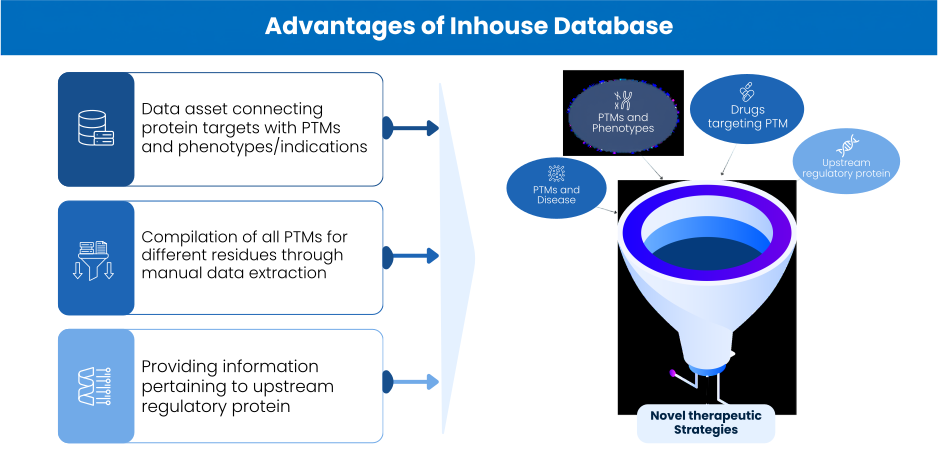
Figure 3: Advantages of In-house Database
Databases dedicated to post-translational modifications (PTMs) have become essential resources for understanding protein regulation and function. However, they are not without limitations. PTM knowledge continues to evolve rapidly, and many experimentally validated modifications remain uncaptured or lack sufficient contextual detail — such as tissue specificity, disease relevance, temporal dynamics, or therapeutic potential. In addition, PTM data is often fragmented across multiple platforms with inconsistent formats, making integration and comparative analysis challenging. Delays in curation and updates can further limit the utility of these resources in fast-moving research areas.
Addressing these gaps requires a more integrated and context-aware approach. Efforts in this direction focus on combining high-confidence experimental evidence with richer biological annotation, linking PTMs to disease associations, phenotypic outcomes, regulatory networks, and potential therapeutic relevance. Regular updates and rigorous quality control are equally important to ensure that such resources remain current and reliable.
By aligning PTM data with advances in artificial intelligence, systems biology, and emerging drug discovery strategies, integrative frameworks are increasingly enabling the translation of molecular insights into practical applications. In this context, efforts such as those undertaken by Excelra reflect a growing emphasis on building high-quality, context-rich PTM resources to support more informed research and therapeutic development (Figure 3). Collectively, these approaches are contributing to a deeper understanding of disease biology and advancing the development of more precise and effective treatments.
Excelra’s practical experience in building structured PTM knowledge resources is demonstrated in our case study on Building a PTM Database for SUMOylation — showing how text-mining, structured curation, and contextual annotation are combined to transform fragmented PTM literature into a navigable, decision-ready research asset for an undercharacterized modification type.
For teams building or benchmarking PTM data infrastructure, Excelra’s Breaking Barriers: Functional Proteomics in Drug Discovery whitepaper provides strategic guidance on integrating large-scale proteomic and PTM datasets into actionable drug discovery workflows — including approaches for handling the noise and context-dependence that make omics-level PTM data challenging to interpret.
References
- Bobalova J, Strouhalova D, Bobal P. Common Post-translational Modifications (PTMs) of Proteins: Analysis by Up-to-Date Analytical Techniques with an Emphasis on Barley. J Agric Food Chem. 2023 Oct 18;71(41):14825-14837.
- Zhong Q, Xiao X, Qiu Y, Xu Z, Chen C, Chong B, Zhao X, Hai S, Li S, An Z, Dai L. Protein posttranslational modifications in health and diseases: Functions, regulatory mechanisms, and therapeutic implications. MedComm (2020). 2023 May 2;4(3):e261.
- Bennett KL, Funk M, Tschernutter M, et al. Proteomic analysis of human cataract aqueous humour. J Proteomics. 2011 Feb 1;74(2):151-66.
- Allen JF, Nield J, Krauss N. Molecular Recognition: How Photosynthesis Anchors the Mobile Antenna. Trends Plant Sci. 2019 May;24(5):388-392.
- Zhong Q, et al. Protein posttranslational modifications in health and diseases. MedComm (2020). 2023 May 2;4(3):e261.
- In Brief. Nat Rev Drug Discov 7, 892 (2008). https://doi.org/10.1038/nrd2740
- In Brief. Nat Rev Drug Discov 8, 110 (2009). https://doi.org/10.1038/nrd2812
- Rubinsztein DC, Codogno P, Levine B. Autophagy modulation as a potential therapeutic target for diverse diseases. Nat Rev Drug Discov. 2012 Sep;11(9):709-30.
- Sathish JG, Sethu S, Bielsky MC, et al. Challenges and approaches for the development of safer immunomodulatory biologics. Nat Rev Drug Discov. 2013 Apr;12(4):306-24.
- Crunkhorn S. Trial watch: enzyme replacement success in Phase III trial for rare metabolic disorder. Nat Rev Drug Discov. 2013 Jan;12(1):12.
- Pichlak M, Sobierajski T, Blazewska KM, et al. Targeting reversible post-translational modifications with PROTACs. J Enzyme Inhib Med Chem. 2023 Dec;38(1):2254012.
- Roskoski R Jr. Properties of FDA-approved small molecule protein kinase inhibitors: A 2024 update. Pharmacol Res. 2024 Feb;200:107059.
- Yoon S, Eom GH. HDAC and HDAC Inhibitor: From Cancer to Cardiovascular Diseases. Chonnam Med J. 2016 Jan;52(1):1-11.
- Wu X, Xu M, Geng M, et al. Targeting protein modifications in metabolic diseases: molecular mechanisms and targeted therapies. Signal Transduct Target Ther. 2023 May 27;8(1):220.
- https://www.biochempeg.com/article/434.html
- Kim DN, Yin T, Zhang T, et al. Artificial Intelligence Transforming Post-Translational Modification Research. Bioengineering (Basel). 2024 Dec 31;12(1):26.
What are the main types of post-translational modifications and why do they matter?
Post-translational modifications (PTMs) are biochemical changes made to proteins after they are synthesized. More than 650 distinct PTM types have been identified, including phosphorylation, ubiquitination, acetylation, methylation, glycosylation, SUMOylation, ADP-ribosylation, palmitoylation, and nitrosylation. Each type involves a specific chemical alteration — the addition of a functional group such as phosphate, methyl, acetyl, or carbohydrate moiety, or the attachment of small proteins like ubiquitin or SUMO — to defined amino acid residues. These modifications act as molecular switches that regulate protein activity, stability, localization, and interactions with other proteins. They matter in medicine because PTM dysregulation is a key driver of cancer, neurodegenerative diseases, immune disorders, and metabolic conditions. By targeting the enzymes that add, remove, or recognize these modifications, researchers have developed some of the most successful drug classes in modern medicine, including kinase inhibitors and HDAC inhibitors.
How does phosphorylation drive cancer and what drugs target it?
Phosphorylation is the addition of a phosphate group to serine, threonine, or tyrosine residues on proteins — a reversible modification catalyzed by kinases and reversed by phosphatases. In cancer, aberrant phosphorylation is one of the most common molecular drivers of disease. Hyperactive kinases — including those encoded by oncogenes such as EGFR, BCR-ABL, BRAF, and HER2 — create sustained, uncontrolled phosphorylation signals that promote cell proliferation, survival, and metastasis. Therapeutic targeting of these kinases has produced transformative treatments. Small-molecule kinase inhibitors — including imatinib (targeting BCR-ABL in chronic myeloid leukemia), gefitinib and erlotinib (targeting EGFR in non-small cell lung cancer), and vemurafenib (targeting BRAF V600E in melanoma) — have become standard of care in oncology. With over 70 FDA-approved kinase inhibitors as of 2024, phosphorylation-targeting therapies represent the most clinically validated class of PTM-directed medicines.
What are HDAC inhibitors and how do they target PTMs in cancer?
HDAC inhibitors target histone deacetylases — the ‘eraser’ enzymes that remove acetyl groups from lysine residues on histone proteins. In normal cells, the balance between acetyltransferases (writers) and deacetylases (erasers) maintains appropriate gene expression patterns by controlling chromatin structure. In many cancers, HDACs are overexpressed or aberrantly recruited, leading to inappropriate silencing of tumor suppressor genes and other cancer-relevant transcriptional changes. HDAC inhibitors restore this balance by blocking the removal of acetyl groups, reopening silenced chromatin and reactivating tumor suppressor expression. FDA-approved HDAC inhibitors include vorinostat, romidepsin, and panobinostat for hematological malignancies, with ongoing trials in solid tumors. Beyond histone acetylation, HDACs also deacetylate non-histone proteins including p53, HSP90, and tubulin — making HDAC inhibition a multifaceted therapeutic strategy with effects on protein stability, signaling, and cytoskeletal function.
What are PROTACs and how do they relate to PTM biology?
PROTACs (proteolysis-targeting chimeras) are bifunctional small molecules that bring a target protein into close proximity with an E3 ubiquitin ligase, inducing ubiquitination and subsequent proteasomal degradation of the target. Unlike conventional inhibitors that block a protein’s activity while leaving it intact, PROTACs eliminate the target protein entirely — and can then be recycled to degrade additional copies. This mechanism directly exploits ubiquitination, one of the most clinically important post-translational modifications. The therapeutic significance of PROTACs is their ability to degrade proteins that are otherwise undruggable by traditional small-molecule inhibition — including transcription factors like MYC, scaffolding proteins, and proteins where resistance mutations have rendered conventional inhibitors ineffective. Several PROTAC programs are in clinical trials, targeting oncoproteins including AR, ER, and BTK, representing one of the most exciting frontiers in PTM-based drug discovery.
How is artificial intelligence being used to advance PTM drug discovery?
Artificial intelligence is being applied at multiple stages of PTM drug discovery. In PTM site prediction, deep learning models trained on large phosphoproteomic and ubiquitinomic datasets can now predict which amino acid residues within a protein are likely to be modified — and by which enzymes — with accuracy that rivals experimental approaches for well-characterized PTM types. In drug discovery, AI models are used to predict kinase inhibitor selectivity across the kinome, to identify novel E3 ligase-target substrate pairs for PROTAC design, and to prioritize PTM-driven disease mechanisms from multi-omics datasets. Generative AI is also being applied to design novel PROTAC linker structures and bifunctional molecules with improved pharmacokinetic properties. At the data level, AI-driven curation and annotation tools are accelerating the integration of PTM evidence from literature and public databases into structured, disease-contextualized knowledge resources — directly addressing the fragmentation and inconsistency challenges that have historically limited PTM data utility in drug discovery programs.
Ready to Turn PTM Data into Drug Discovery Decisions?
Excelra combines structured biological curation, multi-source data integration, and domain expertise to help drug discovery teams build the PTM target intelligence they need — from kinase family landscape analysis and E3 ligase selectivity assessment to integrated omics interpretation and target dossier development.