

Authors: Kshiti Meera Phulphagar and Ashu Srivastav
Relevance of PTMs as drug targets
Proteins are the workhorses of living organisms, yet their full diversity is realized through post-translational modifications (PTMs). Dynamic chemical changes switch the signaling pathways on and off, thus fine-tuning the activity, and dictating cellular fate. Rather than acting as static products of genes, proteins continuously evolve through PTMs to control when, where, and how they function within complex biological systems. When these regulatory mechanisms become dysregulated, they can drive disease onset and progression across conditions ranging from cancer to neurodegenerative disorders, often without changes at the genomic level.
A growing body of research indicates that disease biology is shaped not only by protein abundance but also by alterations in modification states that govern protein stability, molecular interactions, and signaling networks. Mechanisms such as phosphorylation-driven oncogenic signaling, ubiquitination-mediated protein degradation, and epigenetic regulation through acetylation and methylation place PTMs at the center of cellular decision-making. This central role has established PTM-regulating enzymes as a highly compelling class of therapeutic targets, enabling interventions that precisely modulate biological pathways rather than merely inhibiting protein function. As precision medicine continues to evolve, PTMs are increasingly recognized as a critical interface between molecular mechanisms and disease phenotypes, underscoring the importance of integrated PTM intelligence critical for next-generation drug discovery.
The convergence of PTM biology and drug discovery is also reshaping how research teams think about target identification and prioritization. Excelra’s whitepaper on Identifying Druggable Therapeutic Targets explores how PTM enzyme families fit within a broader druggable target landscape — providing a framework for evaluating PTM-based opportunities against established and emerging target classes.
Why PTM enzymes make compelling drug targets?
The PTM landscape represents one of the most extensive regulatory systems in biology, governed by specialized enzyme families that install, remove, and interpret chemical modifications on proteins. Commonly conceptualized within the writer-eraser-reader framework, PTM regulation operates as a dynamic control network. ‘Writers,’ including kinases, acetyltransferases, methyltransferases, glycosyltransferases, and ubiquitin ligases, catalyze the addition of modifications. ‘Erasers’ including phosphatases, deacetylases, demethylases, and deubiquitinases reverse these changes, while ‘readers’ recognize modified residues and propagate downstream signaling effects (Figure 1). Collectively, these enzymes establish reversible and tightly regulated circuits that control protein function in real time.
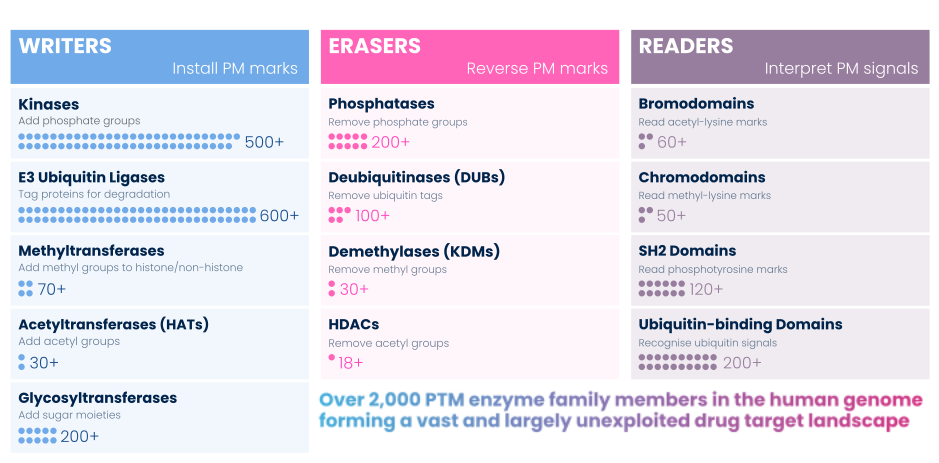
Figure 1. Writer eraser reader framework of the PTM Enzymes Landscape.
This enzymatic architecture makes PTM machinery particularly well suited for therapeutic intervention. In contrast to many structural proteins, PTM enzymes typically contain well-defined catalytic domains and ligand-binding pockets that are highly amenable to small-molecule modulation. Targeting a single PTM enzyme can influence entire signaling pathways by concurrently regulating multiple substrates, thereby enabling amplified biological effects with precise mechanistic control. Notably, modulation of PTMs allows for graded and reversible control of protein activity, rather than irreversible inhibition, aligning closely with the principles of precision therapeutics.
Post-translational modifications (PTMs) encompass both enzymatic and non-enzymatic chemical alterations that regulate protein structure and function following synthesis (Figure 2). The diversity of PTM types — including phosphorylation, ubiquitination, acetylation, methylation, glycosylation, SUMOylation, and lipidation — substantially expands the druggable landscape by creating multiple points of intervention across disease-relevant pathways. These modifications govern essential cellular processes such as protein activity, stability, subcellular localization, molecular interactions, and gene regulation. Clinical successes, particularly with kinase inhibitors and epigenetic therapies, have validated PTM-regulating enzymes as tractable drug targets. At the same time, emerging strategies, such as targeted protein degradation and enzyme-recruiting modalities, are redefining how PTM systems can be therapeutically exploited. Through these diverse functional roles, PTMs influence key biological outcomes, including epigenetic regulation, metabolism, immune responses, and disease pathogenesis.
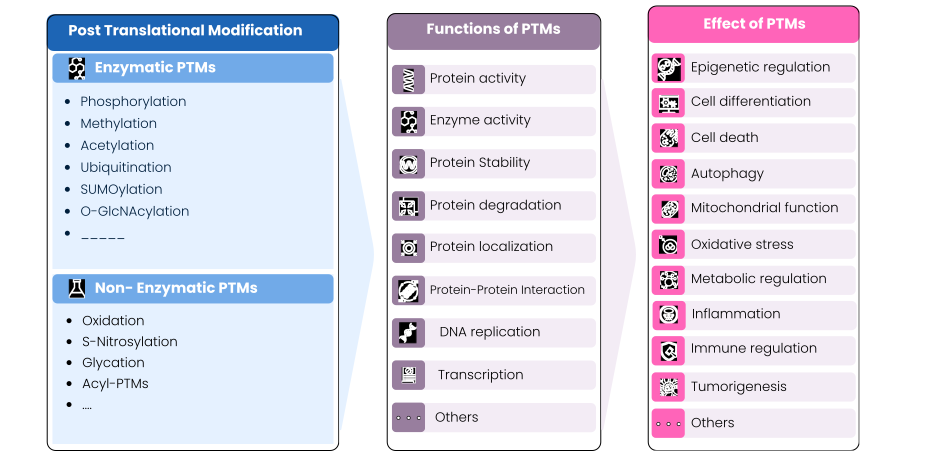
Figure 2. Functions and effects of post-translational modifications (PTMs)
As drug discovery shifts toward systems-level understanding of disease biology, PTM enzymes are being recognized not merely as components of individual pathways but as central regulators of cellular signaling. This positioning offers scalable, mechanistically grounded opportunities for the development of next-generation therapeutics.
Targeted protein degradation — one of the most rapidly advancing PTM-connected therapeutic modalities — represents a direct application of ubiquitination biology to drug discovery. Excelra’s dedicated blog on Targeted Protein Degradation: Understanding the Science and Impact provides a step-by-step overview of how the ubiquitin-proteasome system is being harnessed in PROTAC and molecular glue programs — an area directly enabled by PTM target intelligence.
PTM Enzymes as drug targets: Biological and informatic challenges
Developing PTM enzymes as drug targets presents substantial challenges that compound across multiple levels. From a biological perspective, PTM enzyme families are large, structurally conserved, and highly interconnected. There are more than 500 kinases, over 600 E3 ligases, and nearly 100 deubiquitinases, many of which share similar catalytic domains, overlapping substrate repertoires, and partially redundant biological functions. These features introduce two major and costly risks. First, achieving ‘selectivity’ is inherently difficult: compounds designed to target a specific enzyme often interact with closely related family members, leading to off-target effects or confounding efficacy profiles. Second, ‘functional redundancy’ further complicates therapeutic intervention. When multiple enzymes act on shared substrates or operate within parallel pathways, inhibition of a single target may be compensated by others, diminishing or even negating the intended therapeutic outcome.
A comprehensive understanding of the entire enzyme family landscape, rather than focusing on a single enzyme in isolation — is therefore critical before committing to a drug discovery program.
Assembling the necessary evidence is equally challenging. Building a robust and credible knowledge base requires integrating information from a wide array of sources: thousands of primary publications indexed in PubMed spanning cell biology, biochemistry, genetics, and clinical research; public databases such as GEO, ArrayExpress, PhosphoSitePlus, UniProt, DepMap, HPA, PTMdb, and ProteomicsDB; large-scale phosphoproteomic, ubiquitinomic, and transcriptomic datasets; patent literature; and human mutation repositories. Each of these sources introduces distinct complexities. The published literature is vast and frequently inconsistent — studies conducted across different cell lines, model organisms, and disease contexts often yield conflicting conclusions regarding functional relevance, substrate specificity, and pathway activity. Databases are often incomplete, inconsistently annotated, and not designed for seamless integration, while critically evaluated or conflicting functional evidence is rarely captured in a structured manner. Omics datasets add another layer of difficulty, as they are inherently noisy and highly context dependent. Moreover, for many PTM enzymes beyond well-characterized families such as kinases and HDACs, functional evidence in human disease tissue remains limited. As a result, manually synthesizing a coherent and reliable view for even a single target can require weeks of expert effort.
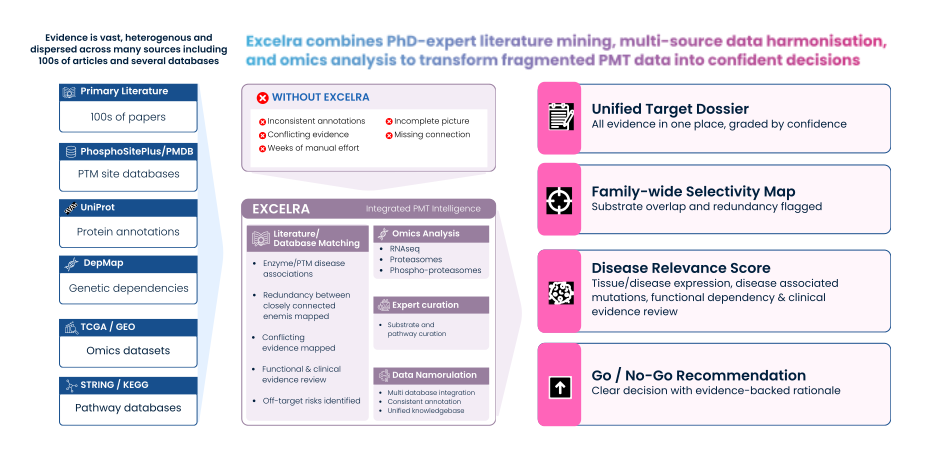
Figure 3. How Excelra’s Target Intelligence Workflow addresses the PTM data challenge
The challenge of integrating heterogeneous PTM data from multiple databases — PhosphoSitePlus, UniProt, DepMap, and large-scale omics repositories — mirrors the broader data integration challenges Excelra addresses across drug discovery programs. Our case study on Building a PTM Database for SUMOylation demonstrates precisely this kind of structured curation and database construction for an undercharacterized PTM type — turning fragmented literature and experimental data into a navigable, decision-ready knowledge asset.
A Practical approach to PTM target intelligence
Bridging gaps in PTM data calls for more than aggregation — it requires careful interpretation within biological context. Increasingly, this means going beyond surface-level literature mining toward structured curation, integrating diverse datasets, and situating targets within the networks they operate in. When PTM–disease associations, enzyme–substrate relationships, omics evidence, and pathway context are considered together, they offer a more complete, and often more nuanced view of target biology, including where confidence is strong and where uncertainties remain.
Efforts in this direction, including those by Excelra (Figure 3), highlight how such integrated perspectives can inform decision-making. In one case (Figure 4), a consolidated analysis of a kinase target helped clarify the strength of existing evidence while identifying key gaps and the experiments needed to address them, allowing teams to move forward with greater clarity and focus.
As the field evolves, PTMs are increasingly revealing themselves not just as layers of regulation, but as entry points into disease biology that may otherwise remain obscured. The question is no longer whether PTMs matter, but how effectively we can interpret and leverage them — particularly when the most actionable insights may lie in the modifications we have yet to fully understand.
| Case Study: Kinase Target Assessment in Disease | ||
| Client needed a rigorous go/no-go decision on a potential kinase target before committing to a full lead discovery program | ||
| Input | Key Findings | Value Addition |
|---|---|---|
|
|
|
Conflicting evidence and limited human data identified early, saving months of effort and enabling a focused, de-risked strategy. |
||
Table 1. Case Study: Kinase Target Assessment in Disease
The drug target dossier approach — consolidating evidence across literature, omics, genetics, and clinical data into a structured, decision-ready format — is central to how Excelra delivers target intelligence. Our blog on Drug Target Dossier: Target Intelligence for Data-Driven Drug Discovery explains the methodology in detail and illustrates how this structured approach reduces the weeks of manual synthesis that PTM target assessment currently requires.
For organizations seeking a comprehensive assessment of their PTM target candidates within a competitive and biological context, Excelra’s Comprehensive Analysis of Putative Drug Targets case study demonstrates how multi-source evidence — spanning experimental data, clinical genetics, and pathway context — is synthesized into actionable target prioritization decisions.
References
- Beltrao, P., Bork, P., Krogan, N. J. & van Noort, V. Evolution and functional cross-talk of protein post-translational modifications. Mol Syst Biol 9, MSB134521 (2013).
- Ramazi, S. & Zahiri, J. Post-translational modifications in proteins: resources, tools and prediction methods. Database (Oxford) 2021, baab012 (2021).
- Walsh, C. T., Garneau-Tsodikova, S. & Gatto Jr., G. J. Protein Posttranslational Modifications: The Chemistry of Proteome Diversifications. Angewandte Chemie International Edition 44, 7342–7372 (2005).
- Suskiewicz, M. J. The logic of protein post-translational modifications (PTMs): Chemistry, mechanisms and evolution of protein regulation through covalent attachments. BioEssays 46, 2300178 (2024).
What are post-translational modifications (PTMs) and why are they important in drug discovery?
Post-translational modifications (PTMs) are chemical alterations made to proteins after they are synthesized — including phosphorylation, ubiquitination, acetylation, methylation, glycosylation, SUMOylation, and lipidation. These modifications are not permanent structural features but dynamic regulatory switches that control when, where, and how proteins function within cells. In drug discovery, PTMs are important because they represent an additional layer of disease biology that is invisible at the genomic level. Many cancers, neurodegenerative diseases, and inflammatory conditions are driven by dysregulated PTM states rather than genetic mutations — meaning that drugs targeting PTM-regulating enzymes can address diseases that conventional genomics-based approaches miss. The clinical validation of kinase inhibitors and HDAC inhibitors has demonstrated that PTM enzymes are tractable, druggable targets capable of producing transformative therapies.
What is the writer-eraser-reader framework in PTM biology?
The writer-eraser-reader framework describes the three functional categories of enzymes that regulate post-translational modifications. Writers are enzymes that add modifications to proteins — kinases add phosphate groups, acetyltransferases add acetyl groups, ubiquitin ligases attach ubiquitin chains, and methyltransferases add methyl groups. Erasers reverse these modifications — phosphatases remove phosphorylation, deacetylases remove acetylation, and deubiquitinases remove ubiquitin. Readers are proteins that recognize specific modifications and translate them into downstream signaling events. This framework is important for drug discovery because it defines three distinct classes of drug targets within any given PTM pathway: blocking a writer prevents the modification from being added, inhibiting an eraser prolongs the modification, and disrupting a reader prevents the cell from responding to it — each offering a different point of therapeutic intervention.
Why is selectivity such a major challenge when targeting PTM enzymes?
Selectivity is a fundamental challenge in PTM enzyme drug discovery because these enzyme families are very large and structurally conserved. There are more than 500 kinases, over 600 E3 ligases, and nearly 100 deubiquitinases in the human proteome — many sharing highly similar catalytic domains and substrate-binding pockets. A compound designed to inhibit one specific kinase or E3 ligase will often bind to closely related family members, causing off-target pharmacology that can produce unexpected toxicity or confound efficacy signals in clinical trials. This selectivity challenge is compounded by functional redundancy: even when a compound successfully and selectively inhibits its intended target, related enzymes acting on the same substrates or pathways may compensate, reducing or eliminating the therapeutic effect. Addressing both challenges requires a comprehensive understanding of the full enzyme family landscape before committing resources to a drug discovery program.
What databases are used for PTM drug target research?
PTM drug target research draws on a diverse collection of public and commercial databases, each capturing different aspects of the PTM landscape. PhosphoSitePlus is the primary resource for phosphorylation and other modification sites, with experimental evidence annotations. UniProt provides curated protein function and modification data with literature evidence. DepMap contains cancer cell line dependency data useful for validating target essentiality. ProteomicsDB and PhosphoSitePlus provide large-scale phosphoproteomic datasets. GEO and ArrayExpress host transcriptomic datasets useful for contextualizing PTM enzyme expression across tissues and disease states. The Human Protein Atlas (HPA) provides protein expression and localization data across normal and tumor tissues. PTMdb aggregates experimentally validated PTM sites across species. No single database provides a complete or consistently annotated picture of PTM biology, which is why integrated curation — combining and critically evaluating evidence across multiple sources — is essential for reliable target assessment.
How does targeted protein degradation (TPD) relate to PTM biology?
Targeted protein degradation is one of the most direct therapeutic applications of PTM biology, specifically of the ubiquitin-proteasome system. Ubiquitination — the attachment of ubiquitin chains to lysine residues on target proteins — is the cell’s primary mechanism for tagging proteins for proteasomal degradation. Therapeutic strategies like PROTACs (proteolysis-targeting chimeras) and molecular glues exploit this machinery by recruiting E3 ubiquitin ligases to artificially ubiquitinate disease-causing proteins, directing them for destruction. This approach can eliminate proteins that are undruggable by conventional inhibition — including transcription factors and scaffolding proteins — by hijacking the cell’s endogenous PTM-driven degradation machinery. Understanding the substrate specificity, tissue expression, and regulatory context of specific E3 ligases is therefore a prerequisite for rational TPD drug design, making PTM target intelligence directly enabling for this therapeutic modality.
What does integrated PTM intelligence mean in practice for drug discovery teams?
Integrated PTM intelligence means synthesizing evidence from multiple heterogeneous sources — primary literature, public omics databases, phosphoproteomic and ubiquitinomic datasets, clinical genetics data, and pathway maps — into a coherent, decision-ready view of a PTM target. In practice, this involves structured curation of PTM-disease associations with explicit confidence levels, mapping enzyme-substrate relationships across relevant disease contexts, cross-referencing omics evidence from appropriate cell lines and patient tissue, evaluating selectivity risks across the full enzyme family, and identifying the key uncertainties and experimental gaps that need to be resolved before advancing a program. The output is not a raw data compilation but an interpreted, contextual view of target biology that allows drug discovery teams to assess the strength of their scientific rationale, identify the highest-priority validation experiments, and make go/no-go decisions with clarity — rather than committing to a target based on incomplete or decontextualized evidence.
Ready to Turn PTM Data into Drug Discovery Decisions?
Excelra combines structured biological curation, multi-source data integration, and domain expertise to help drug discovery teams build the PTM target intelligence they need — from kinase family landscape analysis and E3 ligase selectivity assessment to integrated omics interpretation and target dossier development.