

Authors: Radha Saradhi Reddy Thammineni(Associate Director) & Shawani Shome (Scientific Systems Analyst)
In most scientific institutions, the bottleneck in R&D is not experimentation but consistency. For most teams, sites, and scientists, the same assay is done slightly differently. Data is recorded in different ways Outputs from instruments are stored in different places. Metadata is overlooked. Calculations are done manually. And when it is time to analyse results, create dashboards, or share data for review, the inconsistencies become clearly noticeable.
This is where Dotmatics protocols can be a gamechanger.
In the last project, we aimed to develop reusable protocols in Dotmatics that not only captured data but also:
- Enabled standardized execution of experiments
- Allowed clean and contextual data capture
- Enabled repeatable calculations
- Supported scalable reporting
- Enabled faster onboarding of scientists
- Reduced rework for assays
This blog post outlines the approach we took and the learnings we made while developing reusable protocols.
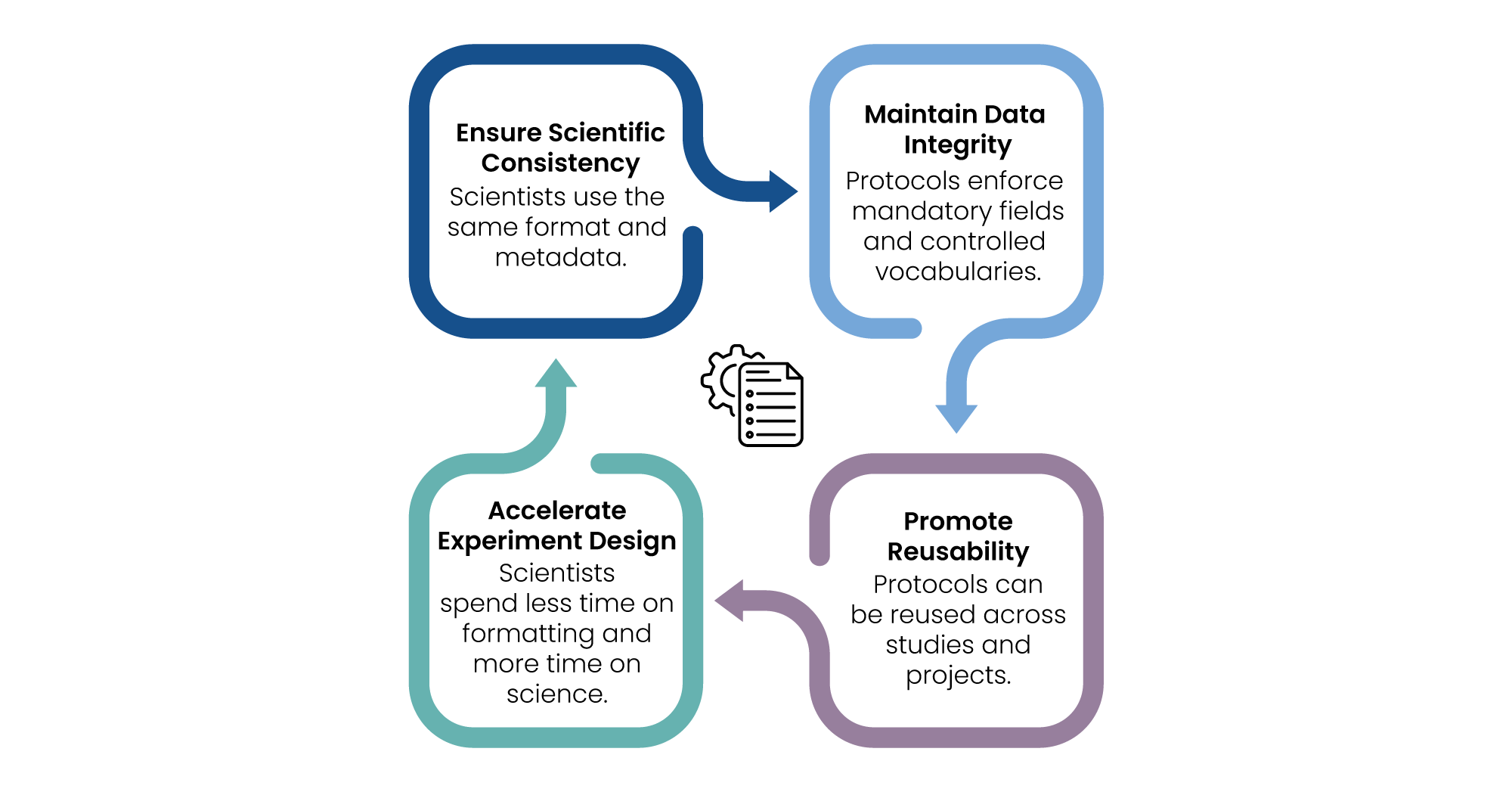
Reusable protocol strategy in dotmatics
Rather than building a single giant protocol to handle all tasks, we built a protocol framework.
1. Base protocol blocks that can be reused
These were standardized parts shared by all protocols:
- Write-Up sections
- UV assay
- Mass Spectroscopy
- Size Exclusion Chromatography
- Endotoxin studies
This ensured that all protocols looked and felt the same, even if the assays were different.
2. Assay-Specific protocols built on top
Each assay protocol was built as a structured, reusable unit. Instead of building a single Oligo Synthesis Protocol, separate protocol templates were created based on synthesis scale reflecting actual lab workflows.
- Simple to understand
- Simple to validate
- Simple to reuse
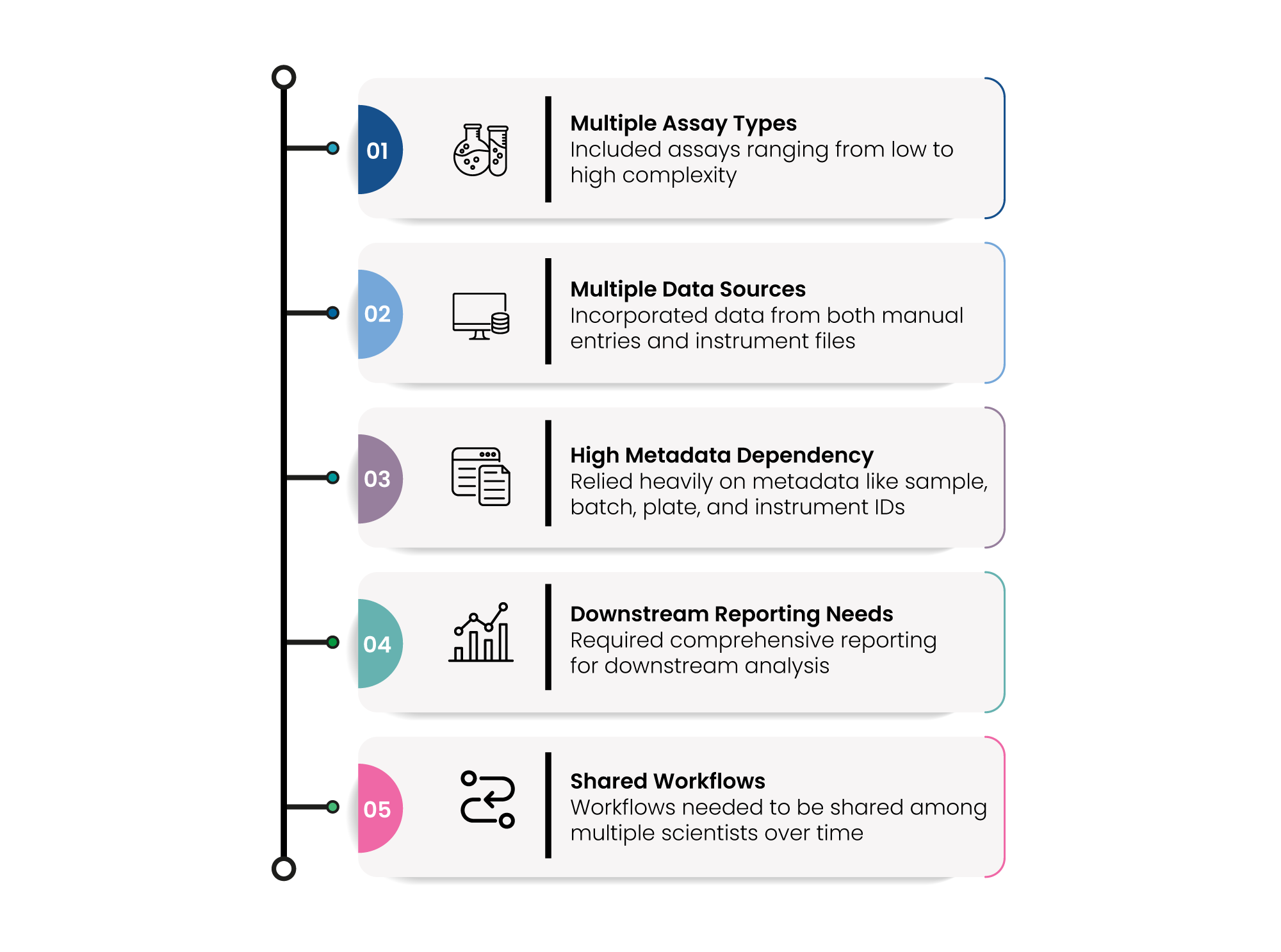
Designing reusable protocols in dotmatics Step-by-Step
Step 1: Begin with a minimum required dataset
The biggest pitfall teams fall into is trying to collect everything from day one. We specified the minimum fields necessary for every experiment to remain useful downstream. This ensured experiments were searchable, comparable, and reportable.
Step 2: Normalize table structures
The strength of Dotmatics comes from normalized tables. We established a normalized table strategy so that, even when assays varied, the underlying structure remained consistent.
Why this was important:
- Simplified mapping across workflows
- Better reporting
- Tear-off calculations
- Seamless integration with Studies and Vortex visualization
Step 3: Leverage placeholders to minimize manual input
Reusable protocols fail if scientists feel they are performing data-entry tasks. We incorporated dropdowns and automated fields wherever possible.
Examples used:
- Auto-filling scientist name
- Auto-stamping experiment date
- Auto-populating Batch ID from bioregister
- Dropdowns for plate types and synthesizer types
- Controlled vocabulary for MS instrument types and plate positions
- Default scales and units enforced (µmol, nmol, etc.)
This significantly improved adoption rates.
Step 4: Create CSS styles, dictionaries, plate and well formats once
This is where our Dotmatics protocols excelled. In our previous project, Dictionaries, Plate and Well Formats, CSS styles for tables, fields, etc. were incorporated into the protocol so that:
- all experiments could refer to the same formats
- Uniform User interface for all protocols
- Mistakes from manual calculations in Excel were avoided
Use of Reusable Dictionaries, Well Formats, CSS Styles ensured that two scientists working on the same assay would get results in the same format.
Step 5: Design protocols for both humans and machines
This is an often-overlooked idea. A good protocol should meet the needs of:
- The scientist entering the data
- The system extracting and reporting the data
So, we ensured that the protocol outputs were machine-readable:
- Tabled data, not text
- Consistent column naming
- Predictable output fields
- Defined result table schema
This made the subsequent processing of data (reporting, visualization, and exporting) much simpler.
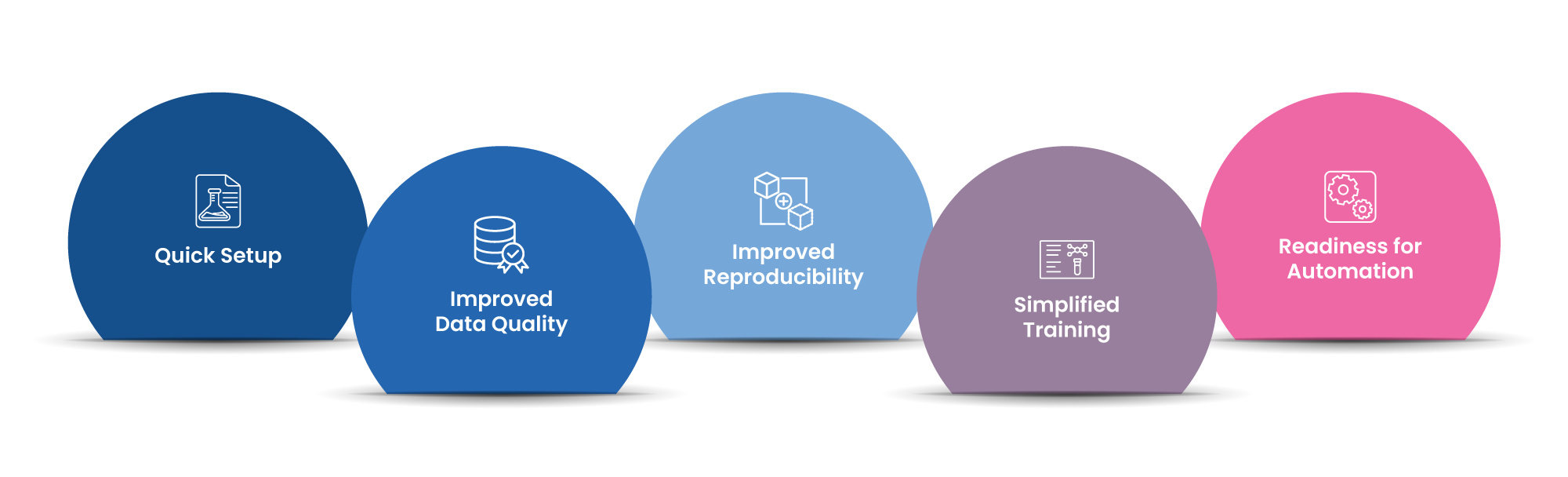
Conclusion
The concept of reusable protocols is not about scientists “being forced to follow a template.” It’s about being able to scale the lab without sacrificing quality.
The past projects we had worked on showed that if protocols are designed well in Dotmatics, with structured tables, calculations, placeholders, and standardized output, it becomes a valuable resource for the organization in the long run.
Reusable protocols mean less friction, better data integrity, and the ability to get from experiment to insight quicker. And in today’s R&D world, that’s the difference between being busy and being productive.