
Table of content
QUICK DEFINITION
Small-Molecule Therapeutics are low-molecular-weight organic compounds (typically under 900 Daltons) designed to regulate biological processes by interacting with specific target proteins. Due to their compact physical size and simple chemical structures, small molecules easily penetrate cellular membranes to engage intracellular targets, cross the blood-brain barrier (BBB), and be formulated into stable, orally bioavailable medications.
Key takeaways
- Core Structural Trait: Defined by low molecular mass, enabling rapid passive diffusion across biological membranes to reach intracellular signaling domains.
- Manufacturing & Delivery Advantages: Highly stable, cost-efficient to manufacture at scale via classic synthetic organic chemistry, and easily scalable for oral delivery.
- Modality Evolving: Shifting beyond basic, occupancy-driven active site inhibitors into advanced structural applications like molecular glues and PROTACs (Targeted Protein Degradation).
- Data-Driven Discovery: Access to structurally diverse chemical intelligence platforms—such as Excelra’s GOSTAR—is essential for training machine learning algorithms to optimize drug-likeness.
Introduction
In the ever-evolving landscape of drug discovery, small molecule therapeutics play a pivotal role. These compounds, typically characterized by low molecular weight, are designed to regulate biological processes by interacting with specific molecular targets. With the advent of new technologies and methodologies, the field of small molecule therapeutics is witnessing unprecedented advancements. This article delves into the intricacies of small molecule drug development, exploring the latest trends, challenges, and opportunities that this domain presents.
Understanding small molecules
Small molecules, defined by their relatively low molecular weight (generally less than 900 Daltons), are organic compounds that can easily diffuse across cell membranes to modulate biological processes. These molecules are integral to numerous pharmaceutical applications due to their ability to specifically target proteins, DNA, or RNA within cells.
The structural diversity of small molecules allows them to interact with a wide range of biological targets, making them versatile tools in drug design. Their ability to be synthesized and modified with precision facilitates the optimization of pharmacokinetic and pharmacodynamic properties.
To support discovery efforts, many pharmaceutical companies leverage cheminformatics solutions for analyzing structure-activity relationships and predicting compound behavior.
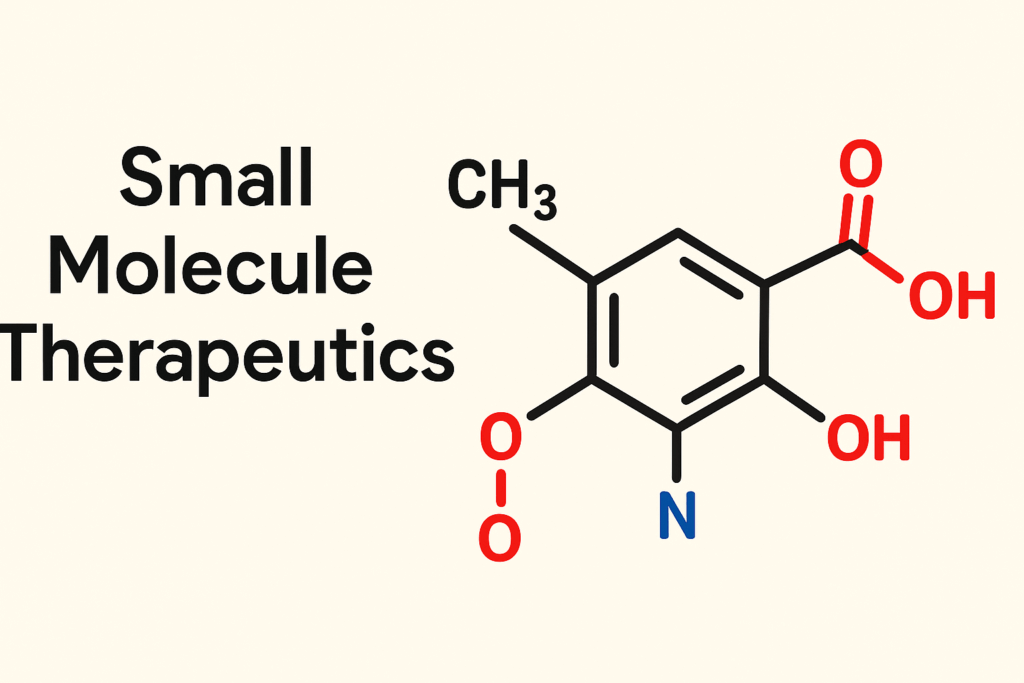
Figure 1: Small Molecule Therapeutics
Examples and applications
The landscape of small molecule drugs encompasses a vast array of pharmaceuticals. Notable examples include aspirin, used for pain relief and anti-inflammatory purposes, and imatinib, a targeted therapy for chronic myeloid leukemia. These examples underscore the therapeutic potential of small molecules in treating diverse medical conditions.
For more insights into how structured data can accelerate such research, see this case study on activity landscape analysis for compound datasets
The process of small molecule drug discovery
Initial screening and lead identification
The journey of small molecule drug discovery begins with high-throughput screening, where thousands of compounds are tested for biological activity. Advanced techniques such as computational modeling and machine learning are employed to predict potential interactions with target proteins, streamlining the identification of promising lead compounds.
Optimization and development
Once a lead compound is identified, the next phase involves optimization to enhance efficacy, selectivity, and safety. Medicinal chemists employ structure-activity relationship (SAR) studies to iteratively modify the chemical structure of the lead compound, improving its interaction with the target molecule while minimizing off-target effects. Tools like scientific data management platforms ensure that all experimental findings and curated datasets remain structured, reusable, and accessible across research teams.
Integration of omics data
Incorporating genomics, transcriptomics, and proteomics data into small molecule drug development offers a holistic view of biological systems. This integration enables researchers to identify novel targets and pathways, enhancing the precision of therapeutic interventions. The challenge lies in managing and interpreting vast datasets, necessitating sophisticated computational tools and expertise.
Challenges in small molecule therapeutics
Drug resistance
One of the significant hurdles in small molecule therapeutics is the emergence of drug resistance. Tumor cells, for instance, can develop mutations that render small molecule inhibitors ineffective. Addressing this challenge requires a deep understanding of resistance mechanisms and the development of combination therapies to circumvent these issues.
Toxicity and safety
Ensuring the safety of small molecule drugs is paramount. Preclinical and clinical evaluations must rigorously assess the toxicity profiles of these compounds. The complexity of biological systems often leads to unforeseen adverse effects, highlighting the need for comprehensive safety assessments throughout the drug development process.
Innovations and future directions
Personalized medicine
The integration of small molecule therapeutics with personalized medicine is a burgeoning area of research. By leveraging genetic and molecular information, researchers can tailor small molecule therapies to individual patients, enhancing treatment efficacy and minimizing adverse effects.
AI and machine learning
Artificial intelligence (AI) and machine learning are revolutionizing small molecule drug discovery. These technologies facilitate the rapid screening of vast compound libraries, predict molecular interactions, and optimize drug design. The synergy between AI-driven insights and experimental validation accelerates the path from discovery to clinical application.
Advanced manufacturing techniques
The production of small molecule pharmaceuticals is evolving with advancements in manufacturing technologies. Continuous manufacturing processes, for instance, offer increased efficiency and consistency compared to traditional batch processing. These innovations ensure the scalable and cost-effective production of high-quality small molecule therapeutics.
GOSTAR™: Powering small molecule therapeutics
Excelra’s GOSTAR™ Small Molecules database serves as a foundational resource in small-molecule therapeutic development. Boasting over 10.6 million chemical structures and 35 million bioactivity (SAR) data points, it offers expansive coverage of the chemical space essential for identifying, optimizing, and characterizing drug candidates. Each data point undergoes a three-tiered curation process, including a QMS-ISO-9001:2015 certification, ensuring exceptional accuracy and reliability—qualities that are vital during both early discovery and optimization phases of small-molecule drug design.
Designed to empower medicinal chemists, data scientists, and decision-makers alike, GOSTAR™ delivers structured, standardized, and easily accessible SAR data. Its user-friendly interface and flexible delivery formats—including bulk flat files, APIs, and on-demand exports—facilitate seamless integration into AI/ML workflows, promoting rapid hypothesis testing and predictive modeling. The combination of comprehensive coverage, high-quality curation, and advanced accessibility makes GOSTAR™ a powerful catalyst in accelerating small-molecule therapeutic innovation.
Conclusion
The realm of small molecule therapeutics is marked by continuous innovation and exploration. As researchers delve deeper into the molecular intricacies of biological systems, small molecules remain at the forefront of therapeutic development. The integration of cutting-
edge technologies, such as AI and omics data, promises to reshape the landscape of drug discovery, offering new avenues for treating complex diseases.
As we move forward, the collaboration between biomedical researchers, data analysts, and pharmaceutical companies will be pivotal in overcoming the challenges and harnessing the full potential of small molecule therapeutics. This dynamic field holds the promise of delivering transformative treatments that will improve patient outcomes and advance the frontier of medicine.
What are small molecule therapeutics?
Small molecule therapeutics are low molecular weight compounds that interact with specific biological targets, such as proteins or nucleic acids, to regulate physiological processes and treat diseases.
How do small molecules differ from biologics?
Unlike biologics, which are large, complex molecules such as antibodies or proteins, small molecules are chemically synthesized and can easily enter cells, making them effective for intracellular targets.
What is the role of cheminformatics in small molecule drug discovery?
Cheminformatics helps researchers analyze structure–activity relationships (SAR), predict compound behavior, and design optimized small molecules with improved potency and safety profiles.
What are common examples of small molecule drugs?
Examples include aspirin (an anti-inflammatory drug) and imatinib (a targeted therapy for chronic myeloid leukemia). These demonstrate how small molecules can address both common and complex diseases.
How does AI support small molecule drug discovery?
AI and machine learning accelerate drug discovery by predicting molecular interactions, optimizing compound design, and analyzing vast chemical datasets to identify potential drug candidates faster.
What is the significance of Excelra’s GOSTAR™ database?
Excelra’s GOSTAR™ Small Molecules database provides over 10.6 million chemical structures and 35 million SAR data points, enabling high-quality, curated insights for medicinal chemistry and AI/ML-driven drug discovery.