

Authors: Radha Saradhi Reddy Thammineni
Introduction
In today’s data-driven pharmaceutical ecosystem, the ability to harness and interpret research data efficiently defines the pace of discovery. Yet, many organizations face fragmented data landscapes — siloed systems, inconsistent ontologies, and under-documented metadata — all of which hinder seamless integration and reuse. This makes a structured data landscape assessment essential for building a scalable and integrated digital foundation in pharma R&D.
A structured Data Assessment is the first critical step in addressing these challenges. It provides a comprehensive understanding of where data resides, how it moves through systems, and what barriers stand between raw information and actionable insights. This foundational step supports broader digital transformation initiatives in pharma R&D.
1. The path to streamlined research
A streamlined research process doesn’t emerge by chance — it’s the result of intentional data design. Organizations that invest in foundational data readiness realize:
- Seamless data integration, ensuring comprehensive research insights
- Consistent ontology usage, promoting standardized research practices
- Enhanced data discoverability, enabling cross-study and cross-domain utilization
- Reduced time for data preparation, freeing scientists to focus on analysis and decisions
- Improved reproducibility, supported by rich and consistent metadata
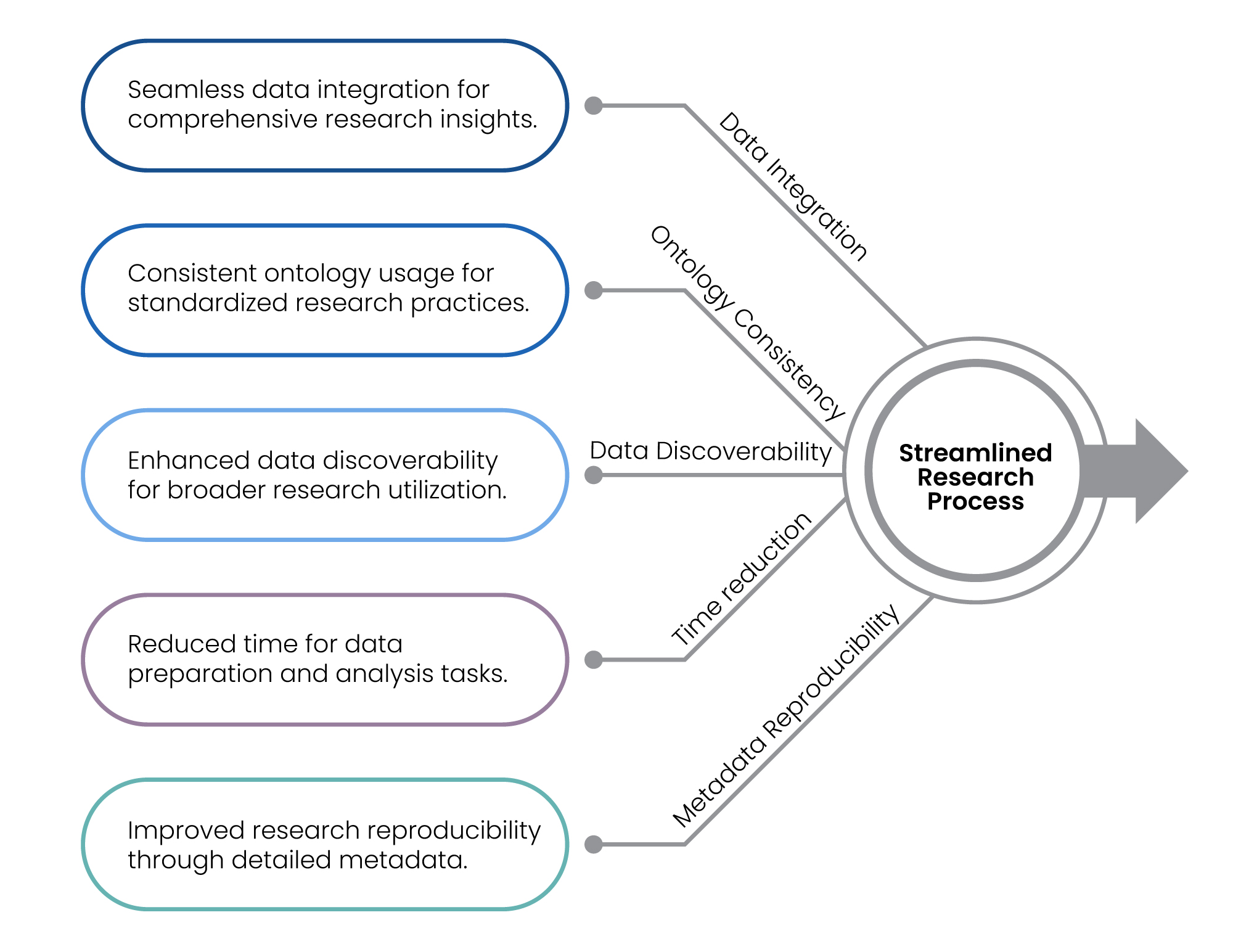
These outcomes collectively enable what every R&D organization strives for: a connected, context-rich research ecosystem that accelerates innovation through effective scientific data management.
2. Understanding the data landscape assessment process
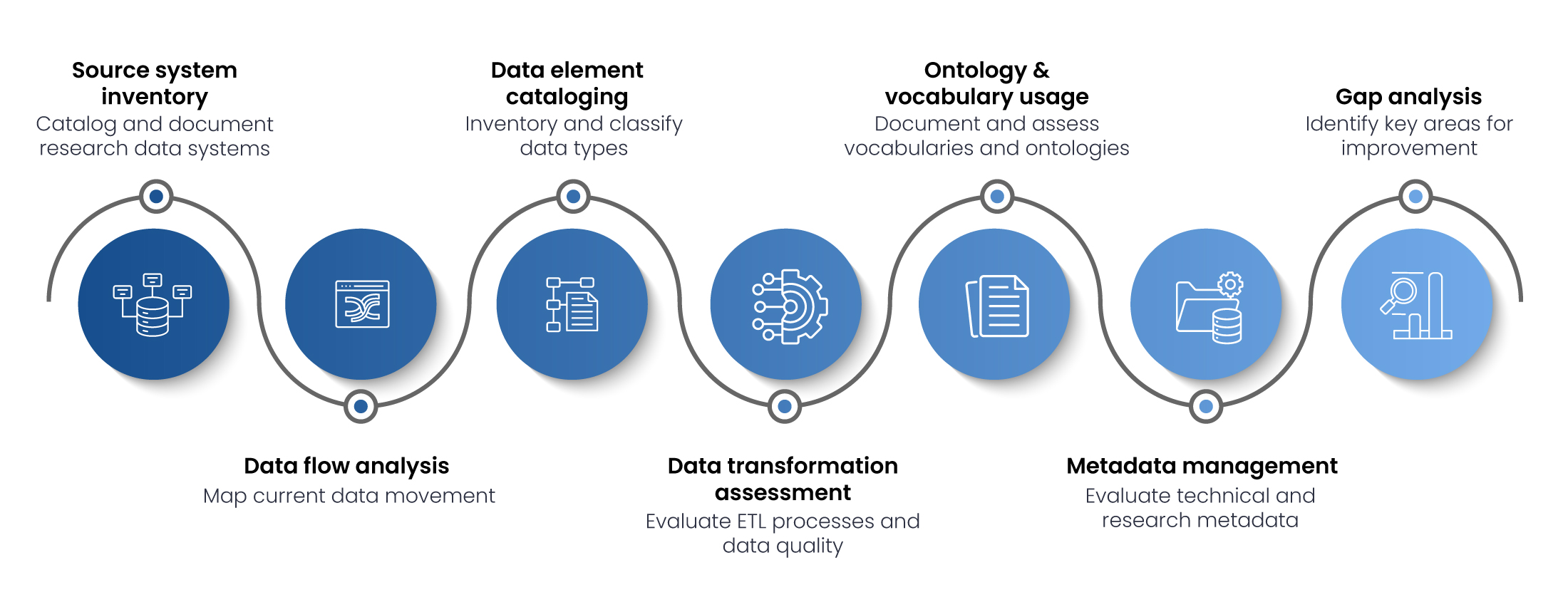
A data assessment is not just an audit — it’s an 8-week exploration of the research data ecosystem. This structured exercise involves cataloging systems, documenting flows, and mapping ontologies to uncover opportunities for standardization and integration.
A comprehensive data landscape assessment is not just an audit — it is a structured exploration of the research data ecosystem.
Typical components of the assessment include:
- Source System Inventory: Identify and document all data-generating and consuming systems
- Data Flow Analysis: Map how data moves across the organization to pinpoint redundancies or bottlenecks
- Data Element Cataloging: Classify and standardize data types to support interoperability
- Ontology and Vocabulary Usage: Evaluate how controlled vocabularies and taxonomies are applied
- Data Transformation Assessment: Examine ETL (extract-transform-load) processes and data quality checkpoints
- Metadata Management Review: Assess completeness and consistency of research and technical metadata
- Gap Analysis: Identify areas where improvements will yield the highest impact
This holistic approach delivers a comprehensive view of the data ecosystem, highlighting where optimization and harmonization can drive measurable outcomes through structured data curation and standardization.
3. Collaborative and insight-driven approach
The success of a data assessment hinges on collaboration. Engaging subject matter experts (SMEs) across functional domains — biology, chemistry, clinical, and informatics — ensures a true “day in the life” understanding of how data is created, consumed, and managed.
Through structured interviews, review sessions, and interactive readouts, teams gain a shared perspective on the current vs. intended state of their data environment. This exercise surfaces both technical and cultural opportunities to enable data-driven research transformation, often supported by scientific informatics consulting.
4. From assessment to action
The deliverables of a robust data assessment extend far beyond documentation. They provide:
- A clear inventory of systems and data sources
- A research metadata catalog for traceability and reusability
- Data flow diagrams showing current and optimized processes
- Ontology implementation assessments for standardization
- Prioritized recommendations to enable integration and analytics readiness
These insights serve as the blueprint for digital transformation — guiding future investments in ELN/LIMS platforms, enterprise data lakes, and AI-driven analytics.
5. Why data landscape assessment matters now
As pharma R&D becomes increasingly data-intensive, organizations must shift from data collection to data comprehension. A well-executed data assessment creates the conditions for FAIR (Findable, Accessible, Interoperable, Reusable) data principles and enables faster, more reproducible science, aligning closely with FAIR data frameworks in drug discovery.
In short, understanding your data landscape is not an operational task — it’s a strategic imperative that defines your readiness for the next generation of digital and AI innovation.
At Excelra, we partner with biotech and pharma organizations to accelerate this journey — from data assessment through to integration, ontology management, and digital platform enablement — helping you move from chaos to context with confidence through our life sciences consulting services.